Photoacoustic (PA) imaging detects an acoustic signal induced by light. This unique method provides simultaneously ultrasound anatomical information with high resolution along with a functional photoacoustic signal, which is created by transformation of a laser pulse to mechanical wave by some light absorbing chromophore. PA imaging shows great potential for various clinical procedures from diagnosis to therapy guidance, which arises from its ability to gather functional and molecular information in real-time regime with a high spatial resolution at clinically relevant depths together with the absence of ionizing beaming.
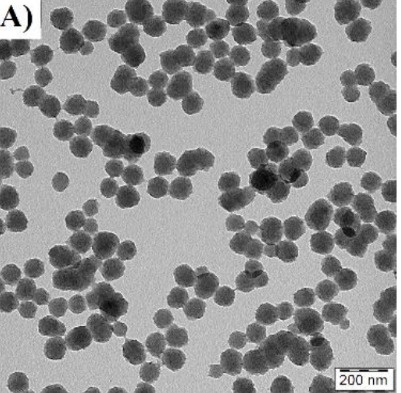
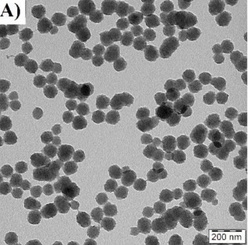
To maximize the contrast effect of the exogenous contrast agents (CA) in the living organism, the optical absorption of the CA should be optimally in the near-infrared (NIR) regions ~700 - 1100 nm and 1200 - 2000. We developed new heterogenous syntheses of polypyrrole (PPY) particles with PA contrast properties in NIR, which allow good control of size (10 nm step within the range 80-300 nm). Besides widely used linear water-soluble polymer stabilizers of the dispersion polymerizations, classical emulsifiers were also successfully employed in their synthesis, what broadens possibilities to employ less hydrophilic comonomers in the aqueous polymerization. Particles as CA for the PA were tested in vitro and in vivo.